A maintenance request is easier to act on when the recipient knows where the issue is, what you observed, and how to coordinate the next step. “The kitchen needs fixing” leaves more questions open than a short, specific report.
This guide offers a practical message template for non-emergency concerns in a U.S. rental home. Use your building's urgent procedure and appropriate emergency services for immediate danger. An ordinary email or portal message should not replace an urgent report when one is needed.
Describe the condition, keep the record, and confirm the authorized process. A clear message helps communication; legal responsibilities and deadlines depend on the applicable rules.
Find the correct reporting channel
Read the maintenance instructions in your lease, resident materials, or management portal. Identify the ordinary reporting method and the separate contact or process for urgent problems. Save those instructions where you can find them again.
If the process is unclear, ask management which channel is monitored and how to obtain a request number or acknowledgment. A message left with an informal contact may not enter the same workflow as a submitted maintenance request.
Use the authorized process rather than arranging work independently and assuming reimbursement. Who can approve a contractor, authorize entry, or agree to a charge should be established before a routine outside service is booked.
Describe observations instead of diagnosing the cause
Give the room or fixture, the symptom, and when you first noticed it. Note whether it is continuing or intermittent and explain any practical impact accurately. Avoid adding technical conclusions you have not had assessed.
For example, “Water appears beneath the kitchen sink after the faucet runs” gives a more useful starting point than naming a pipe component you cannot identify. Do not repeat an unsafe test or take apart the fixture to strengthen the report.
Include earlier request numbers if the same concern has already been reported. Distinguish a recurrence from an unresolved first report so the recipient can connect the history without guessing from separate messages.
Add focused photographs and practical details
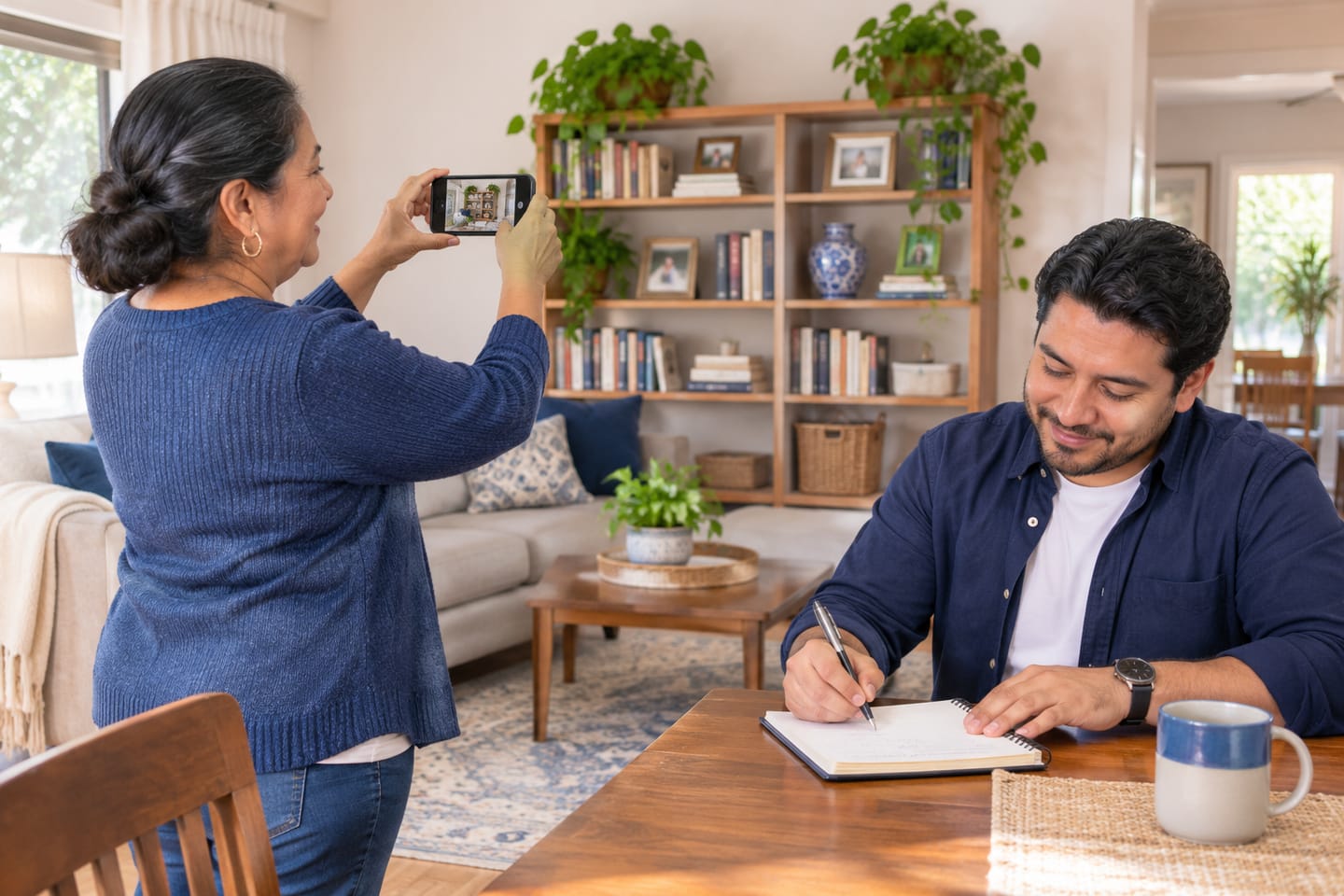
Use photographs you can take safely and that help locate or understand the observation. Include a wider view and a relevant close view when useful. Avoid sending unrelated rooms, private documents, or other residents' identifying information.
Tell management about access considerations such as a pet, a communication preference, or a route that must remain usable. Ask how appointment coordination and entry arrangements will be handled under the applicable process.
If Spanish would make the conversation easier, request a contact who can explain the next step or ask for a written explanation you can review. Do not assume the maintenance worker and the office offer identical language support.
Adapt this non-emergency request
Use the structure with details you can confirm:
“Hello [management contact]. I am reporting a non-emergency maintenance issue in [unit and location]. I first noticed [observation] on [date], and it occurs [pattern]. The current impact is [description]. I have attached [relevant photos] and the earlier request number is [if applicable]. Please confirm receipt, the next assessment step, and how access or appointment timing will be coordinated. My relevant access or communication needs are [details]. Thank you.”
Choose the urgency through the building's actual instructions and the situation, not merely because the template uses the phrase “non-emergency.” If conditions change, use the appropriate reporting channel and clearly update the description.
Keep a chronological follow-up record
Save the submitted message, acknowledgment, request number, and proposed appointment information. After a conversation, write down the date, contact, and agreed next step. Keep the record factual and focused on the maintenance issue.
When following up, reference the original request and ask what remains outstanding. A useful message might say: “I am checking the status of request [number] submitted on [date]. The condition is [current observation]. Please confirm the next step and any preparation needed.”
If a visit occurs, note what was assessed and any follow-up the provider or management described. Avoid marking the issue resolved simply because someone attended if the actual outcome remains unclear.
Use local help for responsibility or rights questions
State and local rules, the lease, and the property's circumstances can affect the available steps. USAGov's tenant resource points renters toward state agencies and legal aid when a dispute cannot be resolved directly.
Do not treat a general template as authorization to withhold rent, deduct repair costs, ignore entry rules, or hire someone at the owner's expense. Get location-specific guidance from the appropriate housing authority or qualified legal help for those questions.
Once management authorizes an outside service, use the relevant guide, such as preparing for plumbing or an appliance assessment, to organize the visit. Explore services only within that agreed process and confirm responsibility for approval and payment first.