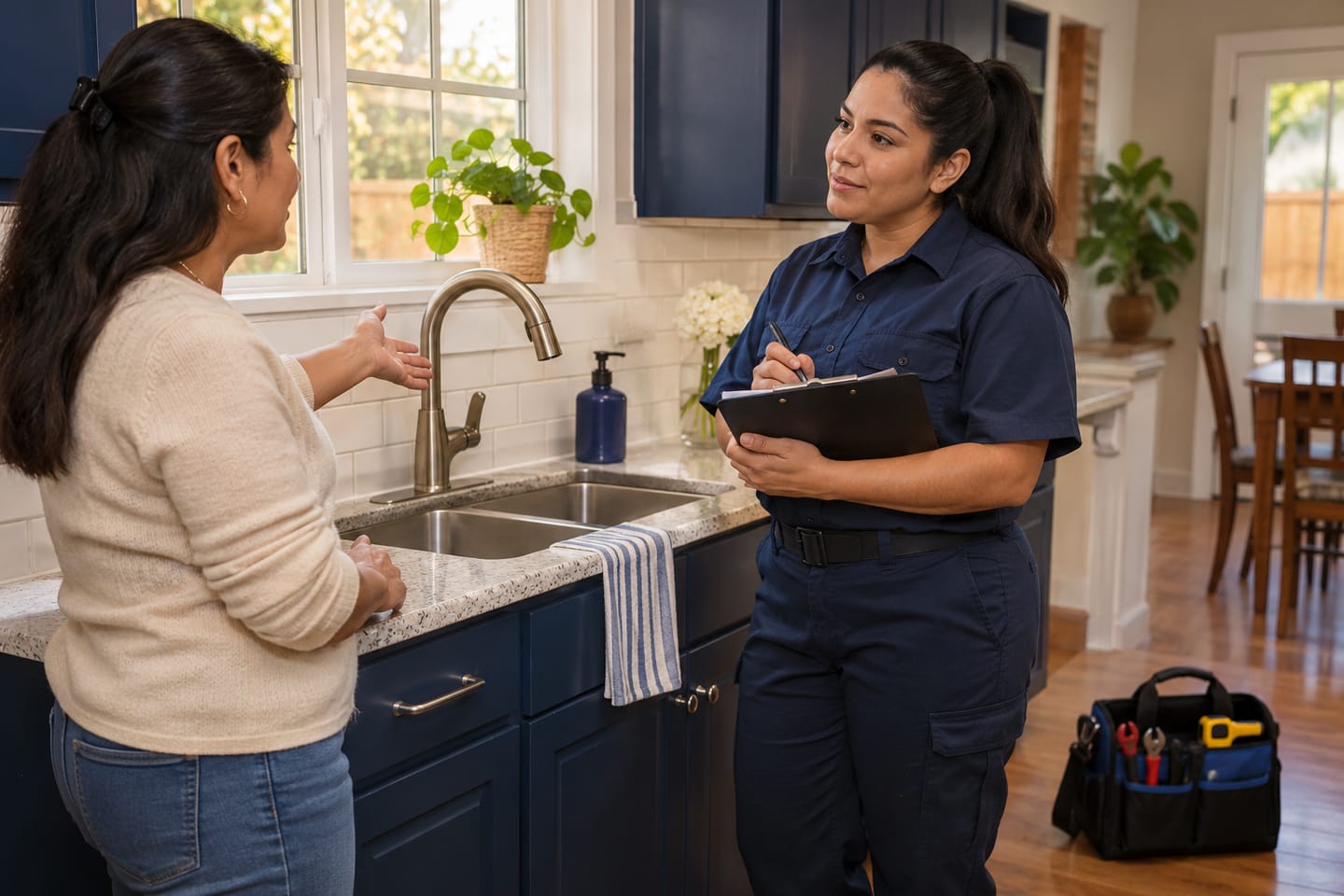
A useful plumbing request explains the fixture, the location, and what you have noticed. It does not require you to identify the failed part or take something apart before a professional visits.
For a planned or nonurgent service call, a short description and a few relevant details can help the business decide how to assess the work. This guide focuses on arranging that visit, understanding the proposed scope, and keeping additional work subject to a clear approval process.
Give observations, property details, and access information. Let the qualified professional assess the cause and explain the options before you commit to a repair.
Identify the fixture and describe the pattern
Tell the business whether the request concerns a sink, faucet, toilet, shower, water heater, or another part of the system. State the room and what you have observed, including when you first noticed it and whether it is constant or intermittent.
For example, “water appears under the kitchen sink after use” is more useful than “the plumbing is bad.” Describe visible conditions without assuming which component is responsible. If more than one fixture is involved, list them separately.
The EPA's WaterSense leak resources explain why household leaks deserve attention and offer information about common locations. A general resource does not establish the cause of a condition in your property.
Gather useful information without disturbing the system
Share the fixture make, model, or existing records if you have them. Take ordinary photographs of the fixture and surrounding area where this can be done without dismantling anything or entering an unsafe space.
Tell the business about previous work relevant to the request. If a part was recently replaced or another professional assessed the issue, provide the information you actually have rather than guessing what was done.
Do not buy replacement parts solely because a similar photograph appears online. Ask the business how it will confirm compatibility and whether it prefers to supply the required materials after assessment.
Clarify property responsibility and access
If you rent, report the request through the property owner's or manager's process and confirm who authorizes the visit. For a shared building, ask whether management needs to coordinate access or any work affecting common systems.
Describe the fixture location, building entrance, parking, and any restriction relevant to the appointment. Ask what you should clear before arrival, such as belongings in a cabinet, without moving equipment or exposing components yourself.
Choose the person who can explain the request and approve next steps. If you prefer Spanish, confirm who can discuss findings and the proposed work with you.
Ask what the visit charge includes
Find out whether the appointment is for assessment, a defined repair, or another agreed service. Ask about the charge, what time or work it covers, and which further steps would be priced separately.
Confirm how additional diagnosis, parts, another visit, or work beyond the first fixture would be approved. A call-out charge should not be mistaken for a complete price for every possible repair.
For a larger proposal, use the home service quote comparison guide to organize labor, materials, exclusions, timing, and payment terms. Check relevant local licensing or permit requirements with the appropriate authority for the proposed work.
Understand the recommendation before agreeing
Ask the professional to explain what was found, what work is recommended, and whether any part of the proposal depends on further assessment. If alternatives are offered, ask how they differ in scope and what remains outside each option.
Make product selections and approvals explicit. A replacement fixture may change the work compared with repairing the existing one, and a customer-supplied item may need a separate compatibility check.
Use our extra-work guide to record a revised scope, added cost, and scheduling effect. Keep the final version together instead of leaving different instructions in several messages.
Send a request that is easy to assess
You can adapt:
“I need a nonurgent plumbing assessment for [fixture] in [area]. I have noticed [observations] since [time]. The fixture is located [access details], and I have [records or product details, if available]. Please confirm the visit scope and charge, relevant qualifications, parts arrangements, and how further work would be approved.”
At completion, ask what was checked or repaired, what remains unresolved, and what follow-up information you should keep. Review the agreed work without treating your own walkthrough as a technical certification.
Explore service businesses on AsiTrabajo, read their published services and coverage, and confirm the appointment directly with the professional who will assess your property.