
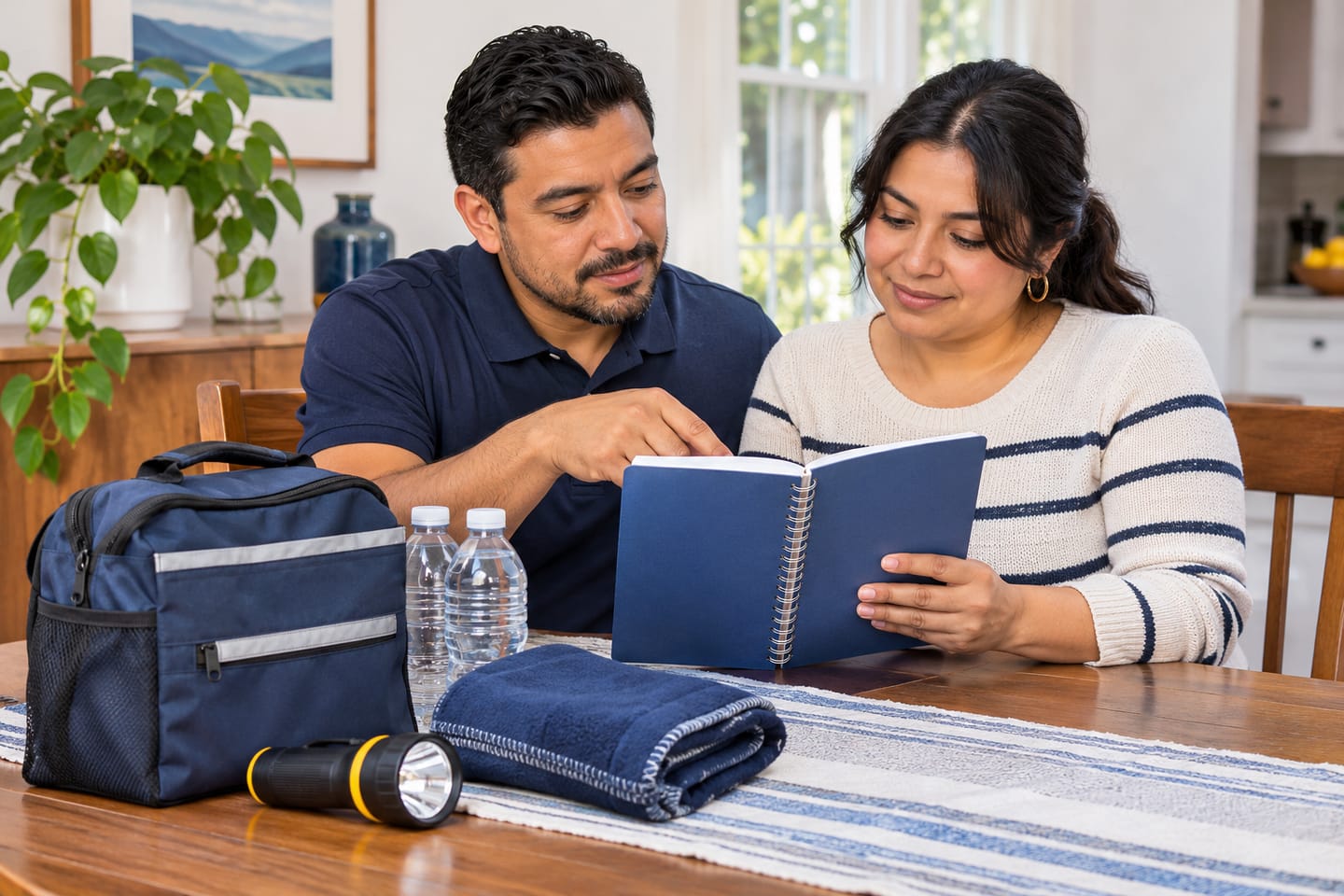
An emergency plan is easier to use when it answers ordinary questions clearly: how will we reach each other, where will we meet, and who needs help getting information? A household does not need a complicated document to begin that conversation.
September can be a useful reminder to review the plan, but the hazards and instructions that matter come from your own community. A family in a coastal apartment and a household in an inland neighborhood may need different arrangements. Use local emergency management information rather than a generic seasonal checklist alone.
Start with the people, contacts, and places. Keep emergency instructions separate from the routine home maintenance work you may arrange later.
Discuss how the household will communicate
List the people who need to check in and the ways they can realistically receive a message. Include a trusted contact outside your immediate area, and agree on what information to share when you can communicate.
The CDC's emergency communication guidance recommends planning and practicing communication, identifying meeting places, and including children, older adults, and pets in household arrangements. It also encourages having more than one way to reach your support network.
Do not keep the only copy of the plan on one person's phone. Prepare a concise version that household members can access if that device is unavailable. Confirm the details with the people named rather than assuming they have agreed to help.
Choose meeting arrangements people understand
Discuss where you would reunite if separated and how you would decide whether that location is appropriate. Follow instructions from local officials during an actual emergency; a familiar meeting place may not be usable in every situation.
Use specific descriptions that each person understands. A building name and an agreed nearby landmark are more useful than “somewhere outside.” Check how the arrangement fits school, work, and caregiving responsibilities without assuming someone can leave immediately.
If the household uses English and Spanish, review the same plan together in both languages as needed. Ask each person to explain the arrangement back in their own words so that unclear details surface before they matter.
Learn the building's procedures
Renters should ask management where to find building emergency information, how urgent building issues are reported, and which communication channel is monitored. Keep those details distinct from the ordinary maintenance portal.
Find out how building alerts are delivered and whether you need to register for them. Ask about evacuation information and arrangements relevant to the people in your household. Do not assume a neighbor's description applies to your unit or entrance.
If a door, shared route, or other property condition needs attention, report the specific observation through the appropriate channel. Our rental maintenance request guide helps organize non-emergency reports; it is not a replacement for emergency services or the building's urgent process.
Include practical support needs
Ask what each person needs to receive information, leave a location, or reconnect with support. Discuss mobility, communication, transportation, and pet arrangements directly with the people involved instead of making decisions on their behalf.
Identify which needs require planning with a school, caregiver, building manager, or other organization. Keep private health and identifying information limited to the people who need it. For personal medical or equipment needs, follow guidance from the relevant care or equipment provider.
Keep the plan usable for a guest or relative who may be helping. Clear descriptions and an agreed contact can be easier to follow than a long list of unexplained abbreviations.
Review records without sharing them publicly
Know where important household records are stored and who can access them appropriately. A home inventory can help organize information about belongings, while an emergency contact sheet serves a different purpose.
Store copies securely and check that the information can be retrieved when needed. Do not post contact sheets, access codes, identification documents, or detailed inventories in a public service request or social media group.
If routine repairs come out of the review, make a separate project list. Describe the actual task to a qualified business without sending your entire household plan. Emergency planning does not require sharing unrelated personal information with a contractor.
Practice a short review together
Use these questions for a calm household discussion:
- Does everyone know how to receive local alerts?
- Are contact details current and confirmed?
- Can people explain the meeting arrangements?
- Does the plan include support and pet needs?
- Can the right people access a copy?
- What changed since the last review?
Update the plan after a move, a change in household members, or a new support arrangement. For ordinary home projects identified during the review, explore local services and confirm the business's scope and availability directly. Plan ahead for those tasks without treating a directory listing as an emergency response service.