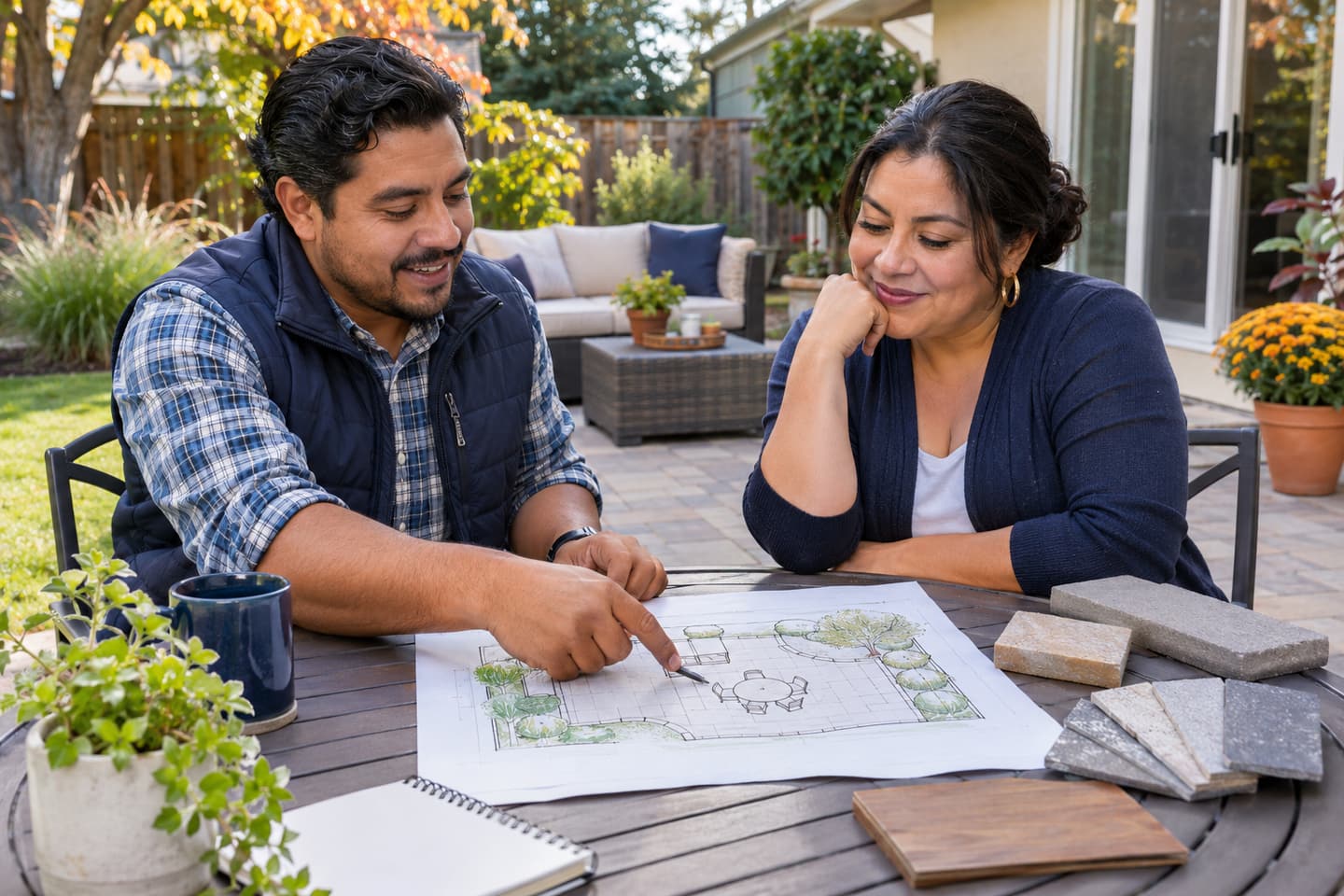

A fall yard cleanup is easier to quote when “clean up the yard” becomes a list of actual places and tasks. Leaves on the entry path, branches near the fence, and material in a planted bed may need different decisions.
September conditions vary across the United States. Some properties are still in a warm growing season, while others are beginning a long period of leaf fall. Plan around your yard and local conditions rather than assuming one visit or one national calendar fits every home.
Identify the areas, decide what happens to the collected material, and confirm what the business considers a separate landscaping or tree service.
Walk through the areas you want included
Make a short list of the front yard, back yard, side passages, driveway edges, patio, and planted areas you want the business to assess. Use ordinary location descriptions and photographs taken from accessible ground-level places.
Explain the result you want for each area. “Collect leaves from the front walkway and lawn” is more specific than “make everything look ready for fall.” Mention decorative items, irrigation components, or young plants that the crew should recognize before beginning.
Distinguish your property from shared or neighboring space. If you rent or have a homeowners association, confirm authority and any relevant landscape rules before arranging work. An open gate does not establish permission to change a shared area.
Separate cleanup from pruning and repairs
Ask which tasks are included: collecting leaves, gathering small debris, clearing agreed beds, or tidying accessible surfaces. Find out how the provider defines the size and type of material its cleanup service handles.
Do not assume the package includes tree work, heavy branches, plant removal, gutter cleaning, or irrigation repairs. Ask for a separate assessment when a task involves a different skill, equipment requirement, or risk.
Our landscaping service guide helps compare broader work. If the gutters also need attention, use the gutter cleaning checklist to define that visit separately rather than adding it informally after the crew arrives.
Decide what should happen to leaves and plant material
Tell the provider whether your aim is collection and removal, placement in an agreed area, or another approach appropriate to the property. Ask for its recommendation without assuming every leaf needs to leave the yard.
The EPA's home composting guidance includes dry leaves and some yard materials among compost ingredients, while identifying materials that should be excluded. A composting plan requires a suitable system; it is not the same as asking a crew to leave an unidentified pile anywhere convenient.
Confirm local collection requirements directly with the collection service or municipality. Ask about accepted material, containers, placement, and timing. If hauling is included, have the proposal identify that responsibility and any separate charge.
Prepare access and identify things to protect
Explain gates, parking, steps, narrow passages, and any limitations on equipment access. Confirm whether outdoor furniture or toys need to be moved and who will handle them. Do not assume a crew will rearrange a full patio as part of leaf collection.
Discuss pets and the household's use of the yard during the appointment. Keep entrances and agreed work routes available. If the provider needs a utility connection, confirm that in advance rather than leaving an arrival-day question unresolved.
Ask how the crew will protect plants and other areas outside the scope. For uncertain or potentially hazardous material, stop the ordinary cleanup discussion and arrange the appropriate assessment rather than asking the crew to handle it casually.
Choose a visit pattern based on your property
One visit may be sufficient for a specific event or task. A property with ongoing leaf fall may call for a different arrangement. Ask how the company handles new debris appearing after an agreed visit and how additional visits are priced.
Compare a one-time offer and a repeated service using the same areas and collection assumptions. Have the provider explain weather delays, cancellation terms, and any restrictions on outdoor equipment or work hours that apply locally.
Avoid judging completion by whether new leaves appear days later. Agree on what the service should accomplish on the day and how inaccessible or unfinished areas will be recorded.
Send a request with a clear finish line
Use this outline:
“We need fall cleanup for [areas]. The tasks are [list], with [material handling preference]. Access includes [conditions]. Please confirm exclusions, hauling or collection arrangements, preparation, weather changes, and options for another visit if needed.”
After the visit, review the agreed areas and document any remaining item using the final walkthrough checklist. Keep the task list for the next season so that you can adjust it instead of starting from a vague request again. Explore local services and confirm current coverage directly with the business.