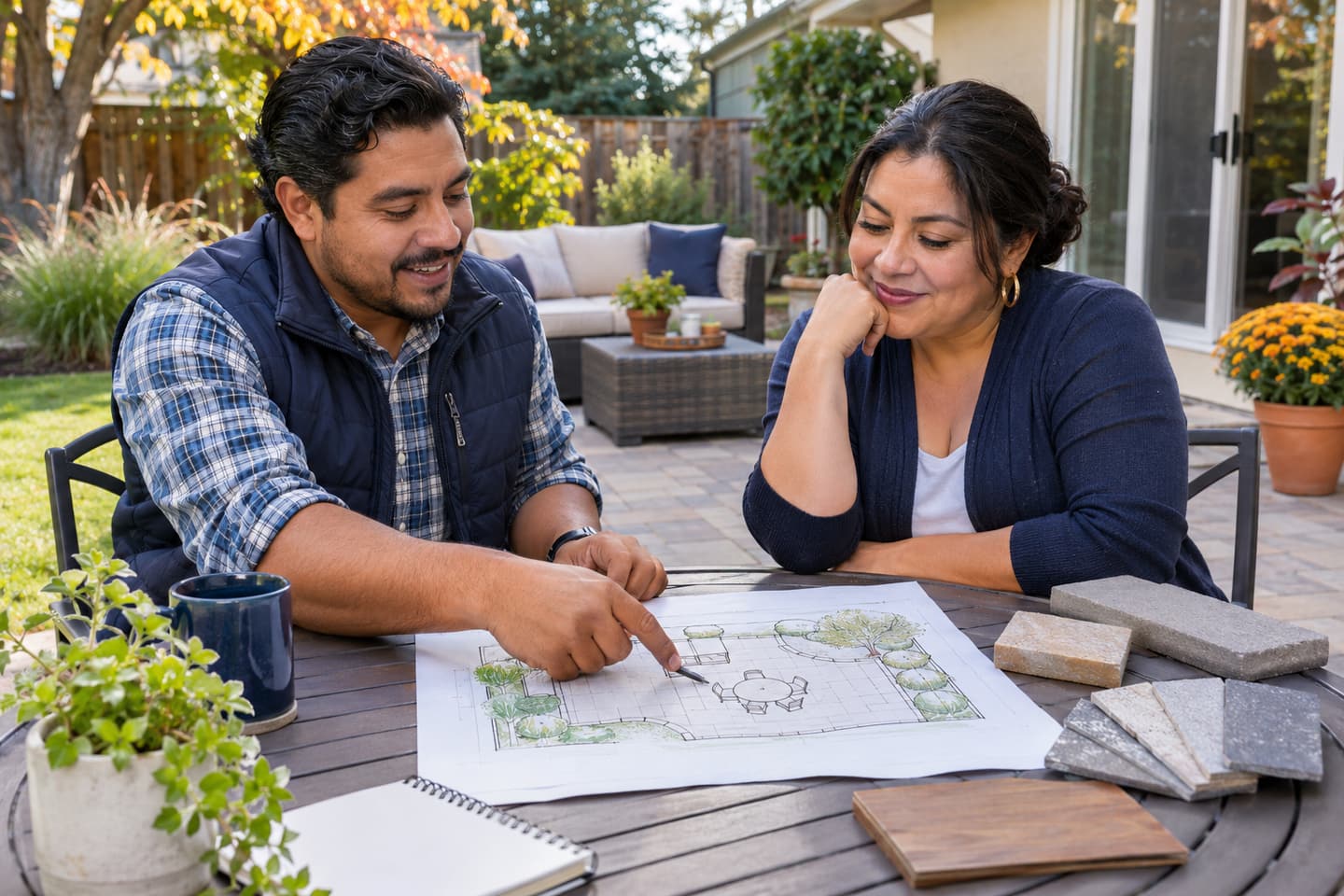
A yard service can mean a recurring mowing visit, seasonal cleanup, care for planting beds, or a complete landscape project. Those are different requests, with different equipment, scheduling, and expertise. Start by deciding which result you need rather than asking every business for a general “landscaping price.”
U.S. climates and property conditions vary widely. A July plan for a dry western yard may look very different from one for a rainy neighborhood elsewhere. Choose a business that can explain how its proposed work fits your site, not a generic seasonal checklist.
Separate recurring maintenance from one-time work. Confirm the tasks, frequency, debris handling, and any conditions that change the visit or price.
Walk the property and define your priorities
Make a list of the areas you want addressed: lawn, planting beds, borders, shrubs, leaves, or a particular cleanup. Add photographs and approximate dimensions where useful. Describe slopes, gates, narrow access, and areas the team should avoid.
Decide what success looks like. You may want a more manageable routine, a tidy front entrance, or a one-time cleanup before guests arrive. Those goals can require different proposals even for the same yard.
Explain whether the property is yours to alter. Renters, shared properties, and neighborhoods with association rules may need permission or approval before planting, removing, or changing landscape features.
Distinguish the services each business actually offers
Ask which tasks are included in maintenance visits and which are separate projects. Possible items to discuss include mowing, edging, leaf collection, planting-bed work, and agreed shrub care.
Do not assume the same team handles irrigation installation, large tree work, hardscaping, or chemical applications. Those tasks may require different qualifications, equipment, licenses, or permits depending on the location and work. Confirm applicable requirements with the relevant authority and the business.
If a professional recommends removing a plant or changing a feature, ask what problem the recommendation addresses and what alternatives are available. Keep design or installation work separate from a routine visit until you agree on its scope.
Ask about plants, water, and local conditions
Tell the business about existing plants you want to preserve, irrigation equipment, known drainage issues, and any local watering restrictions you are aware of. Ask how the proposed maintenance fits those conditions.
The EPA's WaterSense landscaping guidance highlights the importance of local climate, site conditions, appropriate plants, and maintenance when planning a water-smart landscape. Use it as a starting point for questions, not as a prescription for every property.
For new planting, ask who selects the plants, who supplies them, and what ongoing care they need. A beautiful installation is less useful if its maintenance requirements do not fit the time or resources your household can provide.
Compare visit frequency and weather arrangements
Request the proposed frequency, service window, and a list of tasks for each kind of visit. A recurring fee may not include every seasonal task. Ask when additional cleanup, materials, or visits would be quoted separately.
Discuss how rain, extreme heat, drought conditions, or other weather affects the schedule. Ask how the business communicates rescheduling and whether deferred work changes the next appointment. Do not assume that a missed service window means the team can work in unsuitable conditions.
Clarify what happens if you pause or cancel recurring service. Keep those terms with the original proposal so that future changes do not depend on memory.
Confirm access, debris removal, and property protection
Agree on gate access and how pets will be kept away from the work. Mention vehicles, fragile garden items, visible irrigation components, and any area you want protected. Share access information privately.
Ask whether clippings, branches, or leaves will be removed, placed in an agreed area, or handled another way. Confirm any disposal charge and check the property's rules. A neat appearance after the visit depends partly on those arrangements.
If you will be away, agree on how completion or an unexpected issue will be communicated. A brief note or agreed photo can be useful, but confirm the arrangement rather than assuming a business offers it.
Request an itemized proposal
Try this message:
“I need [recurring maintenance or one-time work] for [areas] in [location]. My priorities are [tasks]. Please confirm the visit frequency, included work, plant or water considerations, debris handling, weather arrangements, exclusions, and any separately priced materials.”
Use the home service quote comparison guide to compare answers on the same basis. For other small property tasks, our handyman hiring checklist can help you keep a separate repair list.
Explore the AsiTrabajo service directory, read each business's published work and coverage, and confirm the plan directly before scheduling. The best fit is a service you can maintain and a scope both sides understand.