
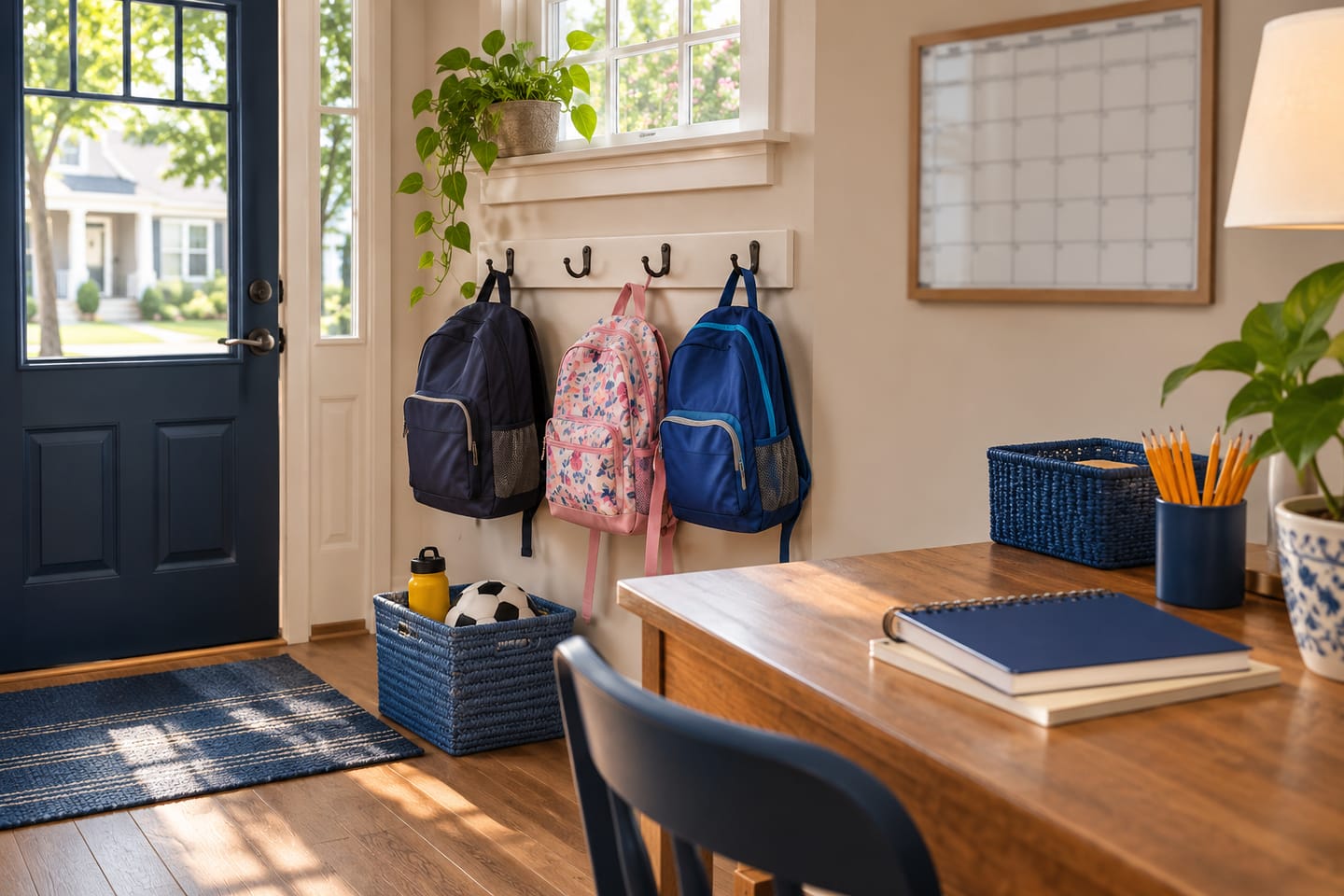
A smoother school morning often starts with ordinary things having a predictable place: backpacks near the door, papers waiting for a signature, and a clear surface for homework. You do not need to reorganize the entire house before the first day.
School calendars vary across the United States. Use your own school's start date and your household's schedule to plan a few manageable changes. For a family sharing a small apartment or organizing in more than one language, simple systems that everyone understands can be more useful than new furniture.
Begin with the places where your routine gets stuck. Give everyday items a home, agree on who does what, and separate organizing from any cleaning or repair work you want to hire.
Notice the difficult moments before buying storage
Walk through a typical morning and afternoon. Where do shoes pile up? Which papers disappear? Does homework begin by clearing the dining table? Write down the two or three problems that cause the most repeated searching.
Ask the people using the space what would help. A high shelf may look tidy but be inconvenient for the person expected to use it. A storage system works better when it fits the household's actual movement through the home.
Try the layout with baskets or containers you already own before purchasing more. If the location does not work after a few days, moving an existing basket is easier than replacing a storage unit.
Create an entryway drop zone
Choose a place for the items that come and go daily. Keep it accessible without blocking doors, walkways, or building access. In a small home, the drop zone may be a basket and a designated shelf rather than a separate piece of furniture.
Decide where these items belong:
- Backpacks and reusable bags.
- Shoes and weather-related items.
- Papers that need an adult's attention.
- Items ready to leave the next morning.
Use labels that the people in your household understand. English, Spanish, simple pictures, or a combination may help different family members use the same system. Keep private school records and identifying documents out of a publicly visible location.
Make a homework space easy to reset
A homework area can be temporary. If the dining table serves several purposes, keep basic supplies together in a container that can be brought out and put away. Decide where unfinished work stays when the surface is needed for a meal.
Check practical details such as lighting, a usable chair, and where supplies will be stored. Arrange cords and furniture so that walking routes remain clear. Ask a qualified professional about installation or electrical work instead of improvising a change to the room.
For each shared space, agree on a short reset: return supplies, put papers in their place, and clear the surface. A routine the household can repeat is more useful than a room that stays organized only on the first day.
Separate sorting, cleaning, and small repairs
Sorting belongings is different from cleaning around them. If you book a cleaner, ask whether organizing, laundry, or moving items is offered; do not assume those tasks are included in a residential cleaning visit.
Clear the areas you want cleaned and prepare a specific task list. Our cleaning service quote checklist helps you describe rooms, supplies, access, and exclusions.
If you need shelves, hooks, or a cabinet adjustment, keep those tasks on a separate repair list. Confirm that the proposed installation suits the property and that you have permission if you rent. The handyman hiring guide explains what to prepare before arranging that visit.
Use a short household planning session
Adapt this practical checklist to your home:
- Confirm the school calendar and the household's morning commitments.
- Pick the entryway and homework problems to address first.
- Assign a place for daily items and pending papers.
- Agree on a brief afternoon or evening reset.
- Identify any cleaning or repair task that needs a separate service.
- Try the arrangement, then change what is not working.
Avoid making every change dependent on a purchase or an appointment. You can start with the household decisions while you compare any services you need.
Describe outside help in practical terms
If you need a service, send a request such as:
“We are preparing our home for the school routine. We need [specific cleaning or repair tasks] in [area]. The space will be [cleared or occupied], and our preferred dates are [dates]. Please confirm the tasks you offer, any preparation we should complete, and what is excluded.”
Explore AsiTrabajo's service directory and confirm coverage and scheduling directly with each business. The goal is a home routine that works for your family, with outside help limited to clearly agreed tasks.